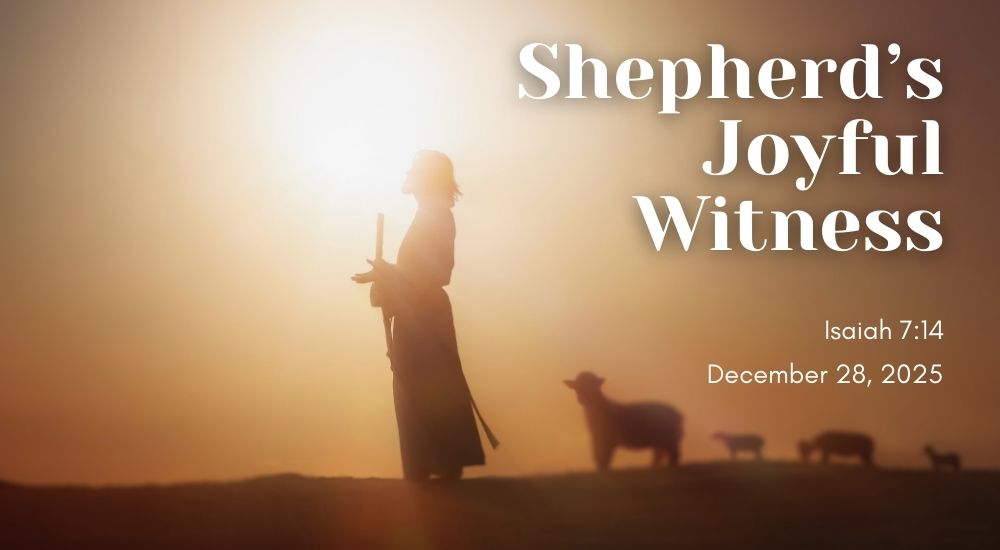
Why did God choose shepherds, rather than kings, priests, or wealthy leaders, to receive the first announcement of Christ’s birth? In biblical times, shepherds were considered lowly, even despised by some. Their work was dirty and required long, lonely hours. Why did God choose shepherds to both tell and have them tell of Jesus’ birth?
Luke 2:20: “And the shepherds returned, glorifying and praising God for all they had heard and seen, as it had been told them.”
- Grammatical Usage: “glorifying” or in the Greek, “doxazontes” meaning, “ascribe; value”; “praising” or “ainountes” meaning, “honor; extol”.
- Literal Interpretation: And the shepherds returned, testifying of God and honoring His provision given all they had heard and seen, as it had been told them.
- Contextual/Comparison: God keeps His Word: God continually uses His Word. Shepherds hold a powerful place in biblical symbolism. The Old Testament often portrays God as a shepherd who guides and protects His people. David, Israel’s greatest king, was a shepherd before he ruled. By choosing shepherds as the first witnesses, God ties together this rich symbolism and reveals Jesus as the Good Shepherd who will one day lay down His life for His flock. Lessons include:
-
- Shepherds hold a powerful place in biblical symbolism. The Old Testament often portrays God as a shepherd who guides and protects His people. David, Israel’s greatest king, was a shepherd before he ruled. By choosing shepherds as the first witnesses, God ties together this rich symbolism and reveals Jesus as the Good Shepherd who will one day lay down His life for His flock. Their presence at the manger highlights humility, guidance, and the sacrificial love that defines Christ’s mission.
- The shepherds also stand in stark contrast to earthly rulers. While kings like Herod sought power and control, these humble shepherds sought only worship. Their visit underscores the difference between worldly authority and the kingdom of God, which is founded on humility, service, and truth. This contrast reminds believers that God’s ways are not the world’s ways, and His message often comes to those who are least expected but most receptive.
- The angels’ message to the shepherds was simple yet profound: “Glory to God in the highest, and on earth peace, good will toward men.” This proclamation reveals the purpose of Jesus’ birth: to bring peace between God and humanity. The shepherds’ visit affirms that they received this message with open hearts and became some of the first evangelists by spreading the good news. Their example demonstrates how believers today are called to hear God’s word and then share it with others.
- Shepherding was a difficult and often underappreciated job. Shepherds spent long nights protecting their flocks from predators and thieves. They were often excluded from religious life because their work prevented them from observing strict ceremonial laws. In fact, shepherds stood on the bottom rung of the Palestinian social ladder. They shared the same unenviable status as tax collectors and dung sweepers. However, to these outcasts, God honored them by giving them the first invitation to witness the Messiah’s birth. This context highlights God’s grace and shows that He values the faithful over pretenders.
- They responded immediately to God’s message. Instead of doubting or delaying, they acted with urgency.
- They came as they were, without attempting to change their clothes or status, showing that God welcomes us just as we are.
- They became witnesses, spreading the good news joyfully. These lessons remind believers that God calls us to respond with trust, to approach Him in humility, and to share His message boldly.
- We need to listen and obey as the shepherds did. They traveled to Bethlehem and found that everything was as the angel had said. The presence of the angels was already a clear sign that validated the message about the Messiah, but God wanted the shepherds to see the infant Jesus and gaze on their Savior. They did not hesitate or argue but willingly obeyed the message. Believers can learn from the examples of these shepherds. We should have the same eagerness to listen to God and obey Him, especially as we have His written word to teach and guide.
For Christians today, the shepherds serve as a model of devotion and discipleship:
-
- Their eagerness to meet Jesus challenges believers to seek Christ daily with the same passion.
- Their joy in sharing the message challenges us to proclaim the gospel to others.
- Their humility teaches us to approach God without pride or pretense. In every way, the shepherds illustrate how to respond faithfully to God’s call.
- It shows God’s heart for the humble, His desire to include the marginalized, and His plan to reveal Christ as the Savior of all.
- Another lesson we can learn from the shepherds at Jesus’ birth is that ordinary people can tell others about the Savior. Once the shepherds made it to Bethlehem and saw the Savior, “They spread the word concerning what had been told them about this child, and all who heard it were amazed at what the shepherds said to them” (Luke 2:17-18).
Believers can apply lessons by maintaining daily devotion, seeking Christ in prayer, and living humbly in service to others. This is important in modern spiritual practice, where distractions make it difficult to focus on God, much less respond in obedience.
The shepherds’ visit is not just a local event but a universal message. Their presence at the manger represents every believer who hears God’s call and chooses to respond. Across cultures and centuries, the story has inspired Christians to embrace humility, seek God sincerely, and spread the message of salvation. The shepherds’ example continues to resonate, showing that the gospel is truly for all people.
- Conclusion: Given what God has done for me, will I be faithful in word and deed?