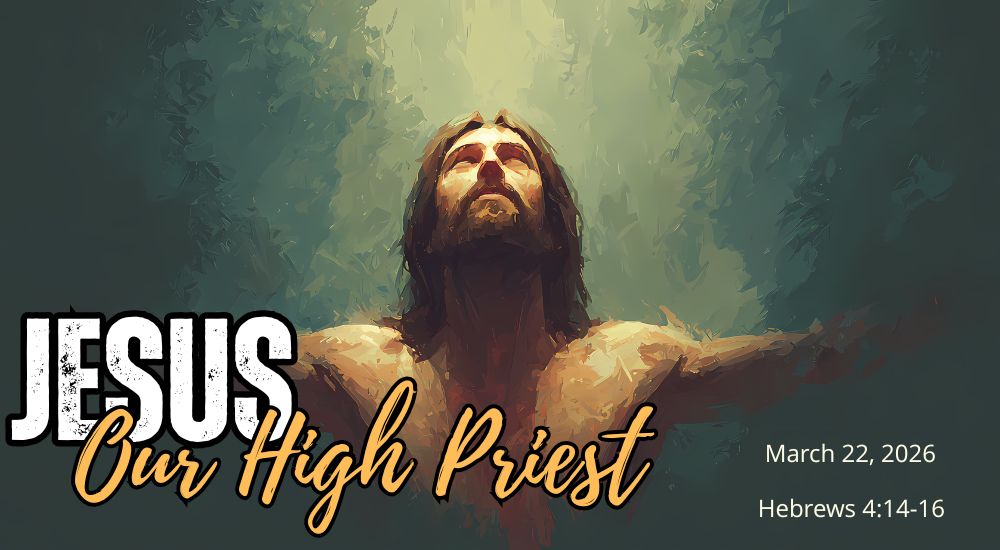
In these verses we have a summary of the whole Letter: how infinitely superior Christianity is to every other religion. These verses contain two exhortations, the one leading to the other – “Let us hold firmly” (v. 14) and “Let us then approach…with confidence” (v. 16).
Hebrews 4:14: “Since then we have a great high priest who has passed through the heavens, Jesus, the Son of God, let us hold fast our confession.”
- Grammatical Usage: “confession” or in Greek, “homologies” meaning, “professed acknowledgement.”
- Literal Interpretation: Seeing that we have a great High Priest who has entered the inmost Heaven, Jesus the Son of God, let us hold firmly to our professed acknowledgement…our faith.
- Contextual/Comparison: God keeps His Word: God continually uses His Word.
- LET US HOLD FIRMLY TO THE FAITH WE PROFESS (vv. 14-15)
The confession is of what we know and believe about the Person and work of our Lord Jesus Christ, as follows:
-
- “We have a great high priest”( 14). Notice the word ‘since’, referring back to Hebrews 2:17; 3:1. High Priest is only one of the many titles applied to Jesus: Messiah, Savior, Son of God, Son of Man, Friend of Sinners, etc. Each one focuses on a particular aspect of who He is and what that means for us. The word “priest” carries a couple of primary meanings: one who mediates; one who is holy or set apart. Jesus is both. Second, our Priest is “great”, a word referring to the dignity of His Person and the perfection of His character (Luke 1:32).
- This great high priest is Jesus– the central message of 14, referring to His perfect sinless human nature (Matthew 1:21). The reference is to His manhood, His humanity (1 Timothy 2:5). Because He is ‘man’ He is fully able to represent us before God and to understand our needs and sympathize with us (Hebrews 2:18).
- This Jesus is “the Son of God”( 14). He can perfectly represent God and express the mind of God to us.
- Our great high priest has fully, finally and once-and-for-all dealt with our sin.The first important work of any priest is to deal with the sins of the people –Jesus is qualified to deal with our sin, indeed, has dealt with it (Hebrews 1:3; 2:9; 2:17; 5:1-3; 7:24-27; 9:11-14; 10:11-12).
- Jesus, our great high priest, the Son of God, “has passed through the heavens”( 14). It means that He has finished His work and has gone up to the throne of God where He now sits in dignity and honor as our living, loving representative (Hebrews 1:3).
- LET US APPROACH THE THRONE OF GRACE WITH CONFIDENCE
V.16 indicates our response to all that Jesus has done and made possible for us. Because of vv. 14-15, “therefore” – v. 16! The important word for us to underline in that verse, however, are the words “draw near”, or “come” which elicits critical questions:
- “Let us approach” (“come”) – WHO?All believers, unworthy as we are. The way into the holiest place is open for all (Hebrews 10:22) – so you may come!
- “Let us come” – HOW?Are we to come with uncertainty as to whether we’ll be accepted? No, we’re to come “with confidence”. A paraphrase of this verse reads, “Let us fearlessly and confidently and boldly draw near.” How is this possible? Because the Lord Jesus is our great high priest. This doesn’t mean that we can come carelessly or flippantly, but it does mean that we can come with absolute assurance that for Jesus’ sake God will accept us and help us.
- “Let us come” – WHERE?The answer is “to the throne of grace.” Yes, we come to a throne, for Jesus is not only prophet and priest, but He is King. We do not come to a throne of judgment because for the believer judgment is past (John 5:24; Romans 8:1). In fact we come to the mercy seat (1 John 2:2), to the place where He is gracious, and this is why we can come boldly.
- “Let us come” – WHEN?The answer is “in our time of need” ( 16). Whenever we feel the need of pardon, assurance, comfort or strength, then we may come at once directly to the throne of grace and receive from the Lord Himself all that we need.
- “Let us come” – WHY?The answer is “so that we may receive mercy”. When we come to the throne of grace we obtain two wonderful benefits:
- MERCY.We are always in need of this, for the reference here is to our constant need of pardon and cleansing, and thank God, this is always available! (1 John 1:9; 2:1).
- GRACE TO HELP.According to 2 Corinthians 9:8 and 12:9, the grace is always available and sufficient, but we must come in order to find and receive. And just how is Jesus to help?
-
-
- Mediator: Jesus serves as the ultimate mediator between God and humanity, providing believers with direct access to God.
- Savior: As the Savior of the world, Jesus’ sacrificial death on the cross and subsequent resurrection provide the means for salvation.
- Teacher: Jesus’ teachings, as recorded in the Gospels, provide guidance for living a life that is pleasing to God.
- Source of Strength: Jesus is revered as a source of strength, offering comfort and hope during difficult times.
- Lord: Jesus is the Lord of the universe, and believers are called to follow His example.
- Friend: Jesus is also a friend, providing companionship and support in times of need.
Through these roles, Jesus’ impact on our lives is profound, shaping our beliefs, values, and daily actions.
- Conclusion: The heart and hand of God reach for you: will you take hold?